
The Red River cart is a significant and well-known part of Métis culture. The name of them originates from the Red River Colony, where many Métis people lived. The carts were such a large part of Métis culture at this point in time that Métis people were sometimes referred to a being “half man half-cart” by plains Indigenous peoples. Today, the Red River cart is represented on different Métis flags and logos to symbolize craftsmanship and entrepreneurship.
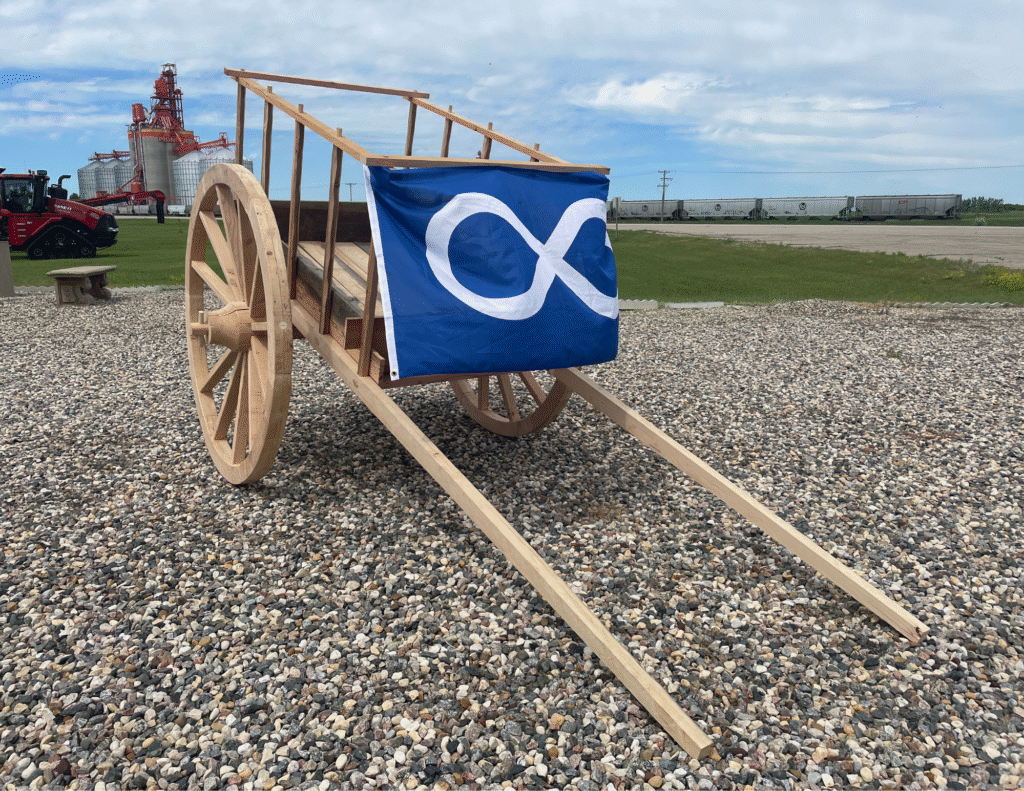
Throughout the majority of the 1800s, Red River carts were a very important mode of transportation for Métis people living in the prairies. These carts were used to carry different kinds of trade goods and furs to and from hunting, camping, and farming sites scattered across the plains. While they were mainly used for transportation, Red River carts also served as makeshift homes during longer trips.

The Souris Valley Museum received a Red River cart built by George Fayant through the City of Estevan, and unveiled it to the public on June 21st, 2023.
George Fayant

George Fayant is a proud Métis man born and raised in Southern Saskatchewannear the Qu’Appelle Valley. Coming from a family of carpenters and construction workers,George has been involved in the industry for years, having started working forhis father’s company at 14.George has his degree in business administrationfrom the First Nations University of Canada/University of Regina and spent many years in various governmental andnon-governmental organizations working in the administration field.
George has been working on Red River carts since 1998, building them in various scales and giving presentations and workshops on the history of them and how they were built using antique tools. These presentations have been given to elementary, high, and community schools as well as the Universities of Regina and Saskatoon.
Red River Cart Fun Facts:
- Used for transportation by the Métis people in the mid to late 1800’s in the Prairies to carry loads of goods including bison meat across distances.
- The name of the cart is derived from the Red River. As well, the Red River Colony was inhabited and settled by Métis people.
- During the fur trade, the carts replaced boats as they could carry more goods and could float in the river.
- Also served as a temporary home on long trips. Tied many together to form a train for long trips.
- Made entirely of wood, and tied together with leather, sinew, or rope.
- Usually pulled by one horse, ox, or pony.
Recent Comments