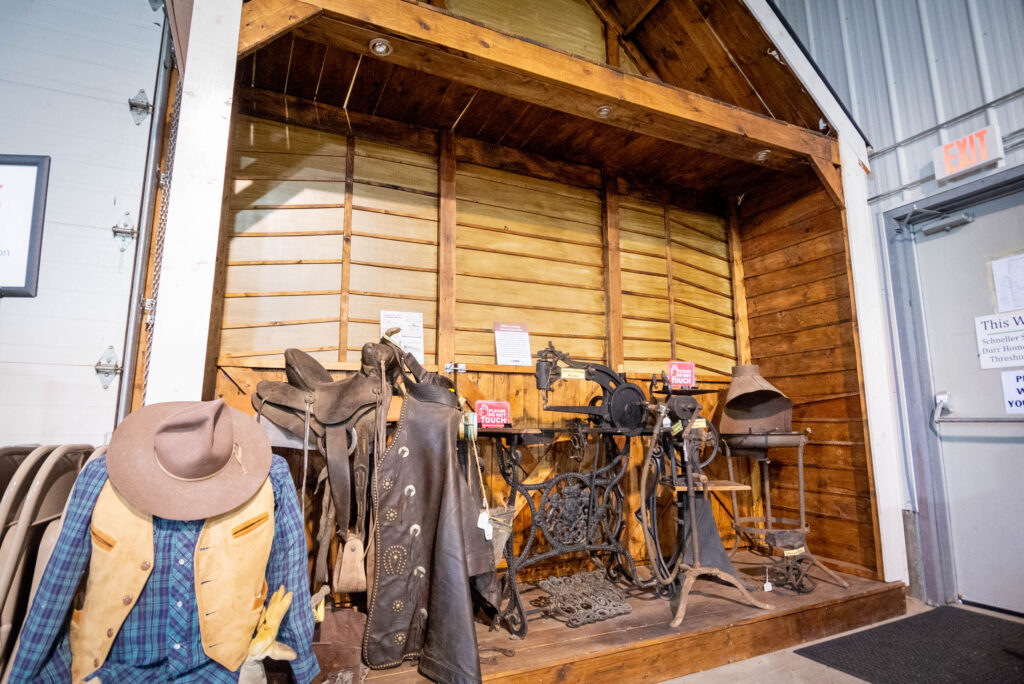
This stable shows different machines used by early settlers to help ease their work around the farm. Horses were essential for both work and transportation. They needed to be shoed on regular basis. A horse with sore feet could not work. Good horseshoes, when fitted, contributed to the working life of the horse.
Horses were essential for both work and transportation. They needed to be fitted for horseshoes on a regular basis which is where the blacksmith played an important role in the community.
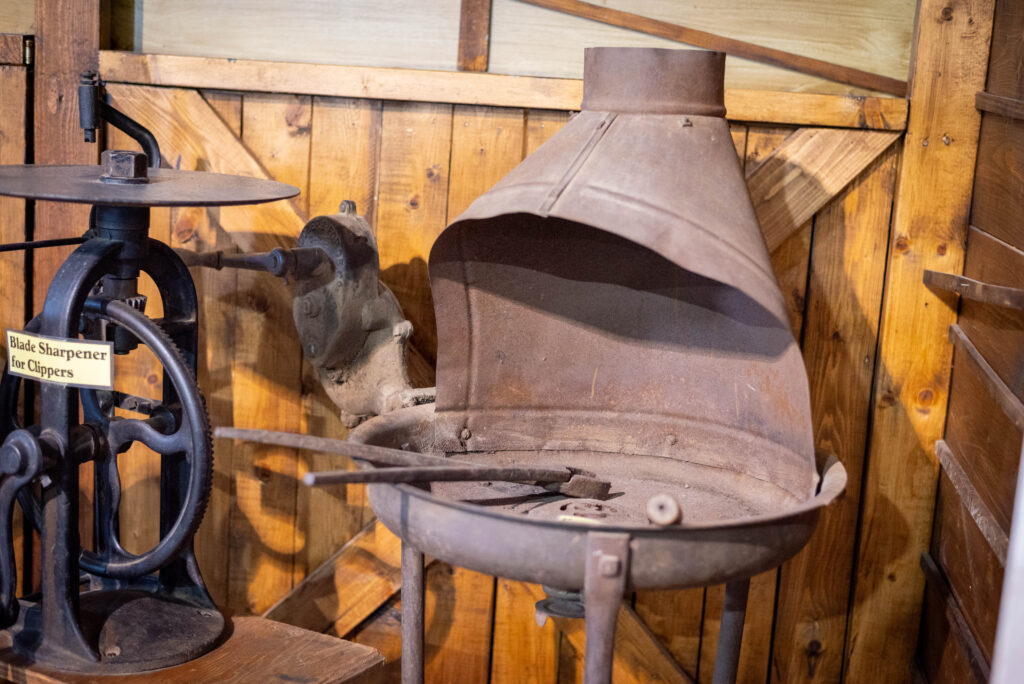
One of the most important men to arrive in a pioneer community was the blacksmith. The term “blacksmith” is derived from the words “black”, meaning black metal and “smite” meaning to strike hard. The blacksmith performed a number vital to the community, the primary one being to keep horses’ hooves in good condition.The blacksmith had a forge where, with the aid of a bellows, he kept his fire hot. He also had an anvil, which was a solid iron bat on which he could hammer horseshoes fresh from the fire. Once the shoe was the right shape for the horse’s hoof, it was put into a bucket of cold water to temper the metal and cool it off. The shoe was then nailed to the horses’ hoof.
The blacksmith manufactured all kinds of metal items for use in settlers’ homes, everything from nails, to hinges to axe heads. Blacksmiths also made and repaired tools and farming equipment.
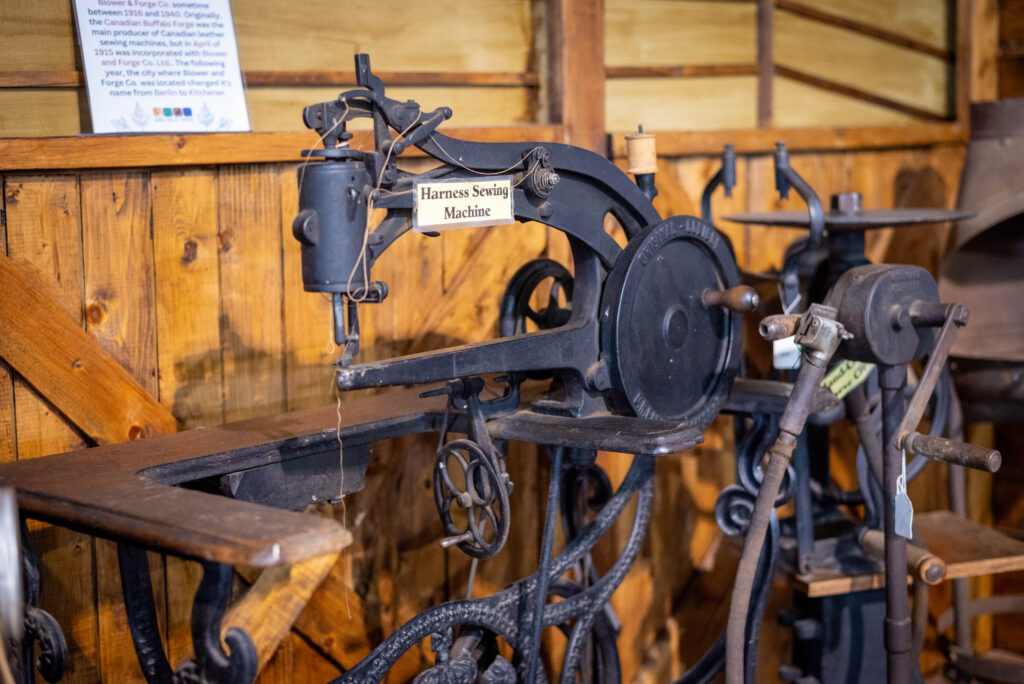
Another place where people visited for horse related merchandise was the Harness, Saddle and Shoe Shop. This type of shop was run by a person who worked with leather and had a heavy-duty sewing machine. The shop owner would also repair and also make and sell harness equipment, saddles, shoes and boots.
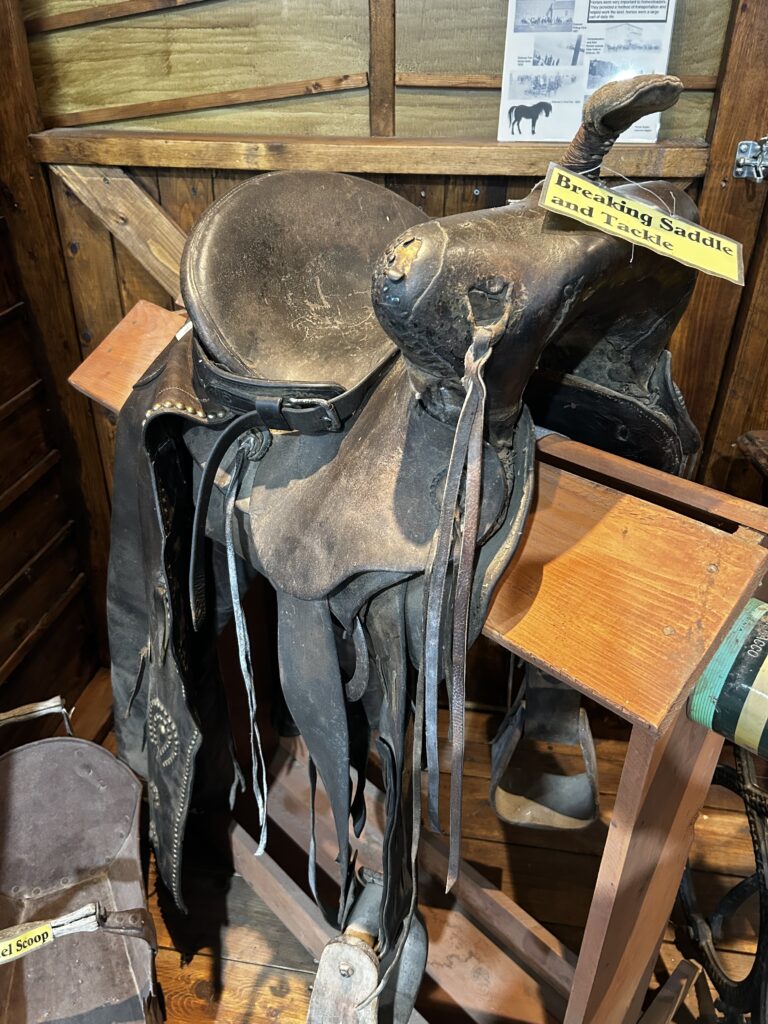
One of the first ways people got around was on horseback. This saddle was made in 1920 by a cowhand named Johnny Bjorklund. It was special saddle for breaking or training horses. Notice that the saddle is built up in the front. That was so the cowhands did not get thrown off the horse as easily.
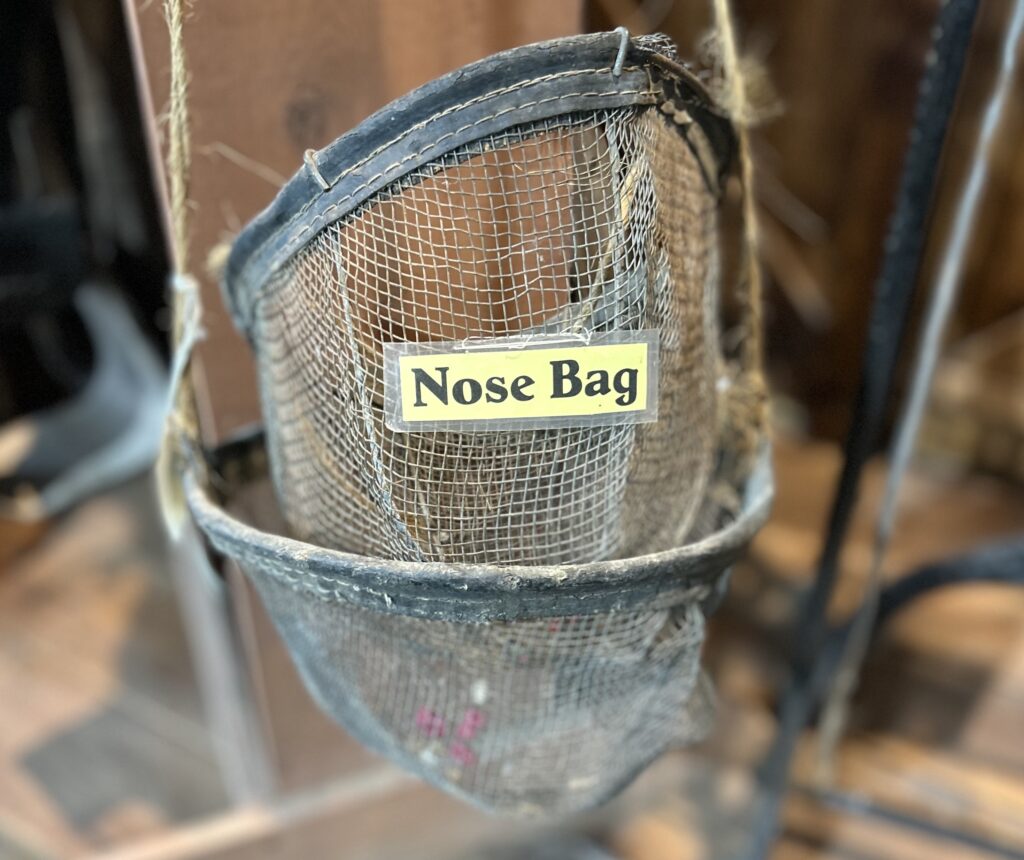
Nose bags like this were put on horses to keep the flies off their noses. Horse flies and deer flies bite horses’ noses and it can cause them to become irritated and uncontrollable. Also, the bags prevented the horses from being distracted and eating bushes as they walked by.
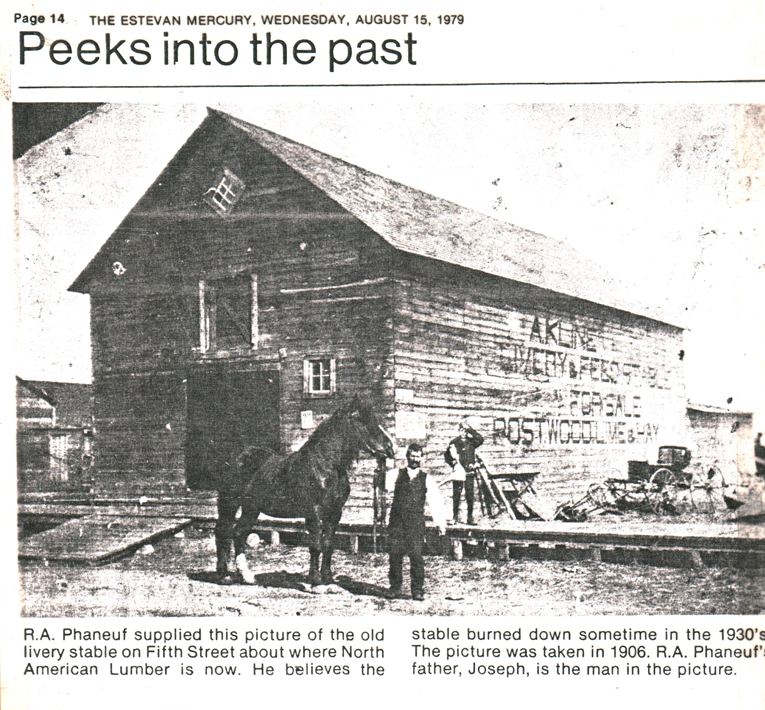
People who did not own a horse could go to a livery stable to rent one. Buggies, wagons and sleighs could also be rented. When someone came to town and planned to stay for a while, the livery stable was the place to leave the horses. Horses would get food and water during the stay.
Recent Comments