
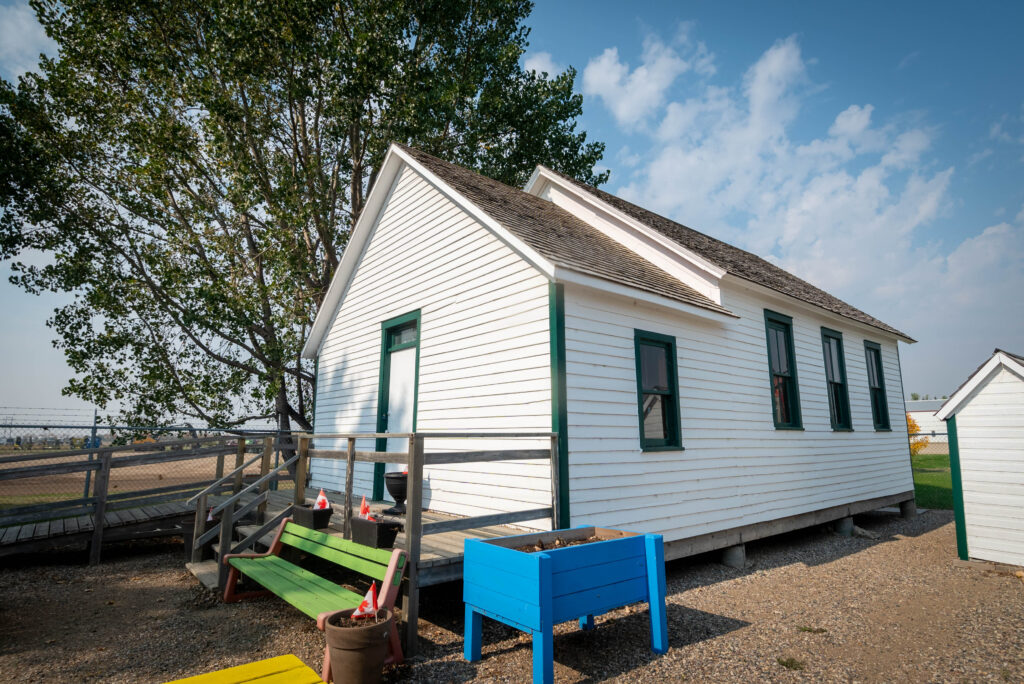

The Schneller Schoolhouse is a restored one-room school building that is part of the outdoor exhibits at the Souris Valley Museum. The museum itself focuses on preserving and sharing the history of daily life, settlement, and development in the region, and the schoolhouse is one of its key historical structures.
Early History of the School
- The school, officially known as Schneller School District #1998, was built in 1908 and operated until 1950.
- It was located near Bromhead, Saskatchewan, serving children of farming families in a rural community.
- Like many prairie schools of the time, it was a one-room schoolhouse, where a single teacher taught students of multiple ages and grade levels together.
The school was named after George Schneller, an early settler who homesteaded in the area and donated land for the school.
After Closure
After the school closed in 1950:
- The building was repurposed and used as a granary by a local farmer.
- In the early 1980s, it was purchased and restored by Stanley “Stan” Durr, a local collector and historian.
- Durr later donated the schoolhouse and many artifacts to the Souris Valley Museum, helping form the foundation of its collection.
Relocation to the Museum
- The Schneller Schoolhouse was moved to the Souris Valley Museum site in 2002.
- Today, it stands in the museum’s courtyard alongside other historic buildings such as a homesteader shack and cook car.
It is also notable as one of the few designated historic buildings in the Rural Municipality of Estevan No. 5.
What It Represents
The Schneller Schoolhouse helps visitors understand:
- Rural education on the prairies in the early 20th century
- The challenges of teaching in isolated farming communities
- The role of schools as social and community hubs
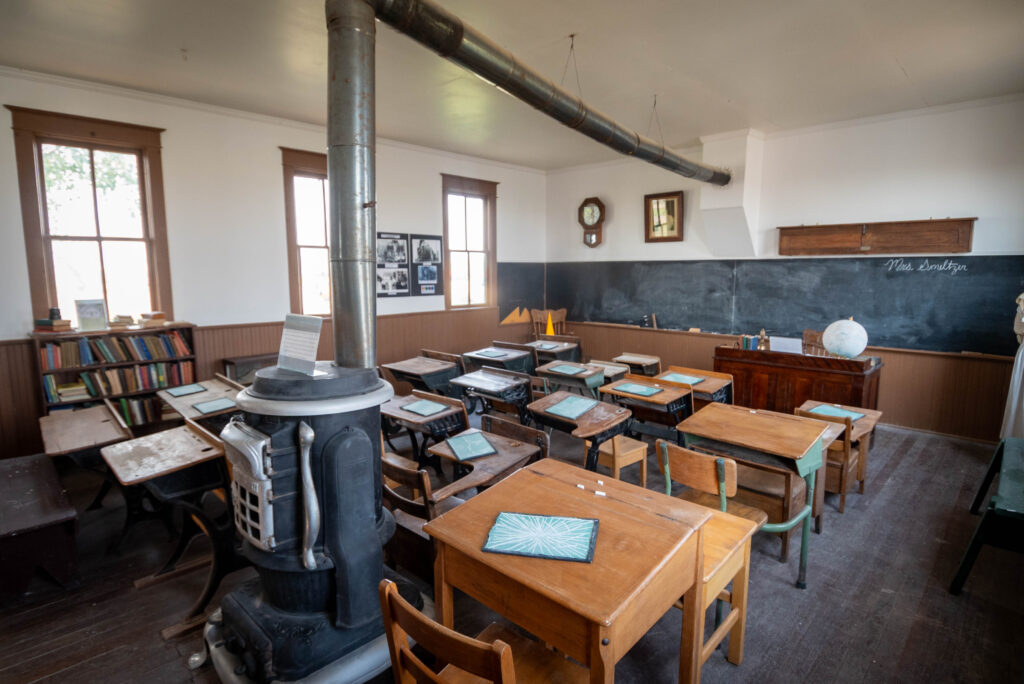
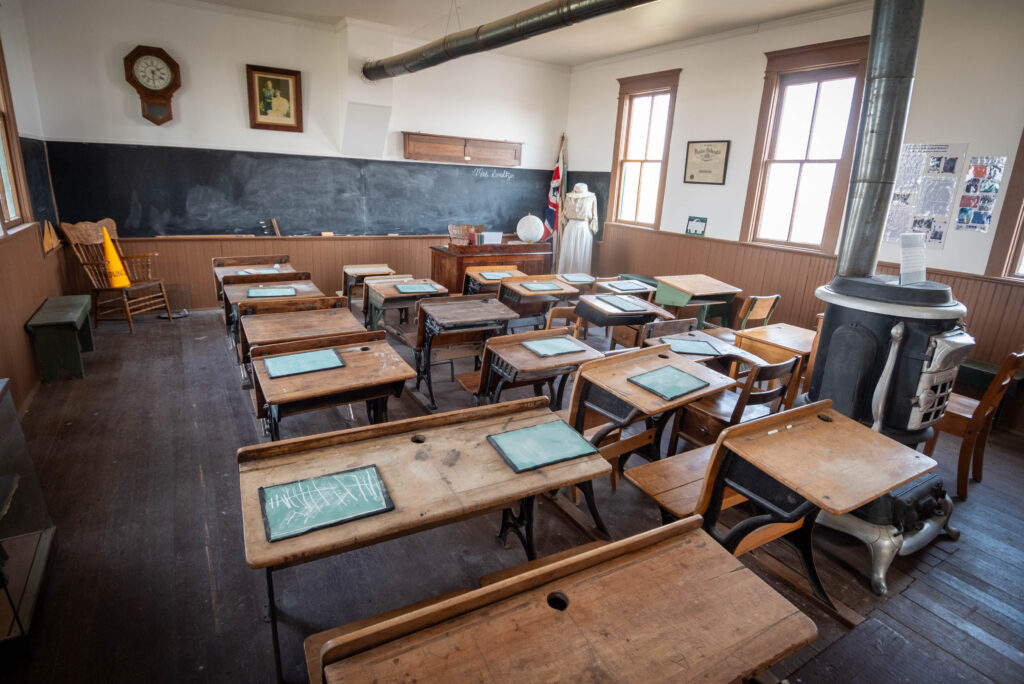
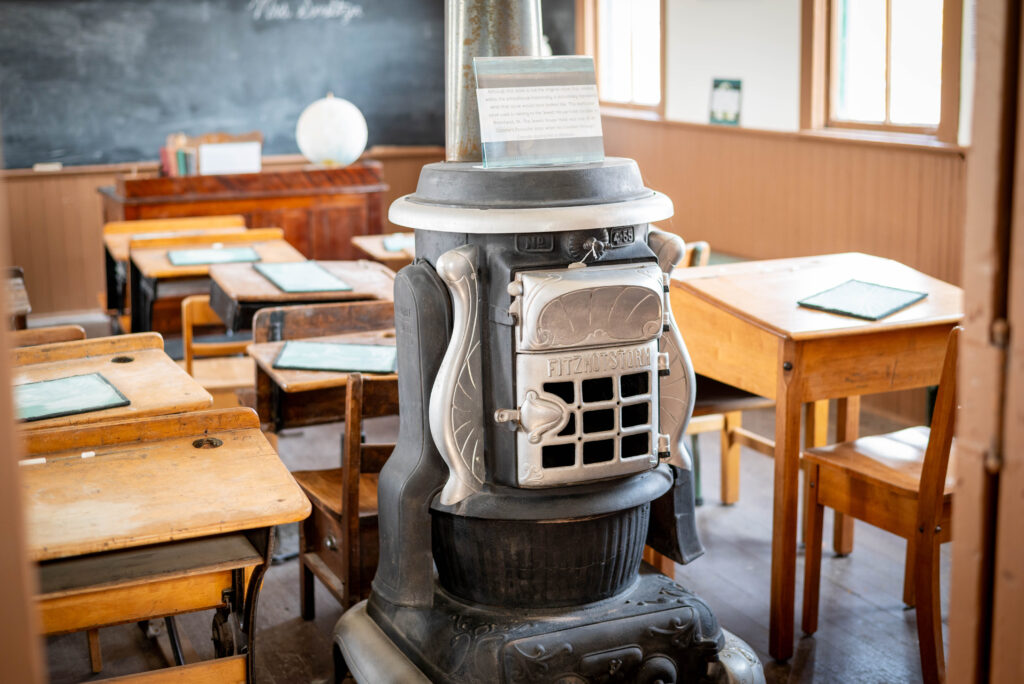
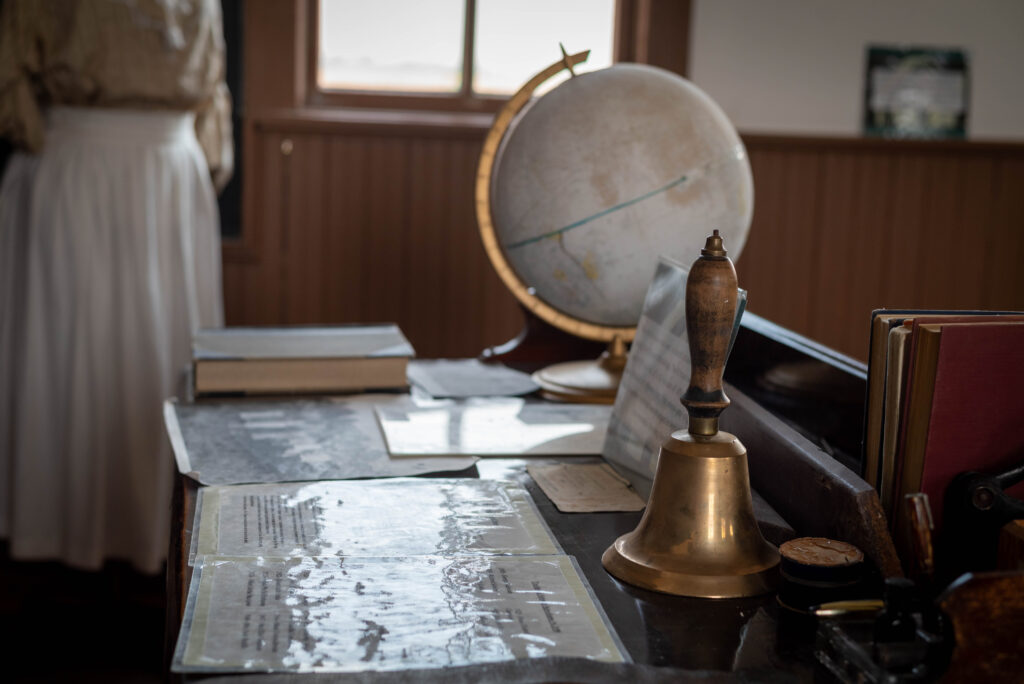
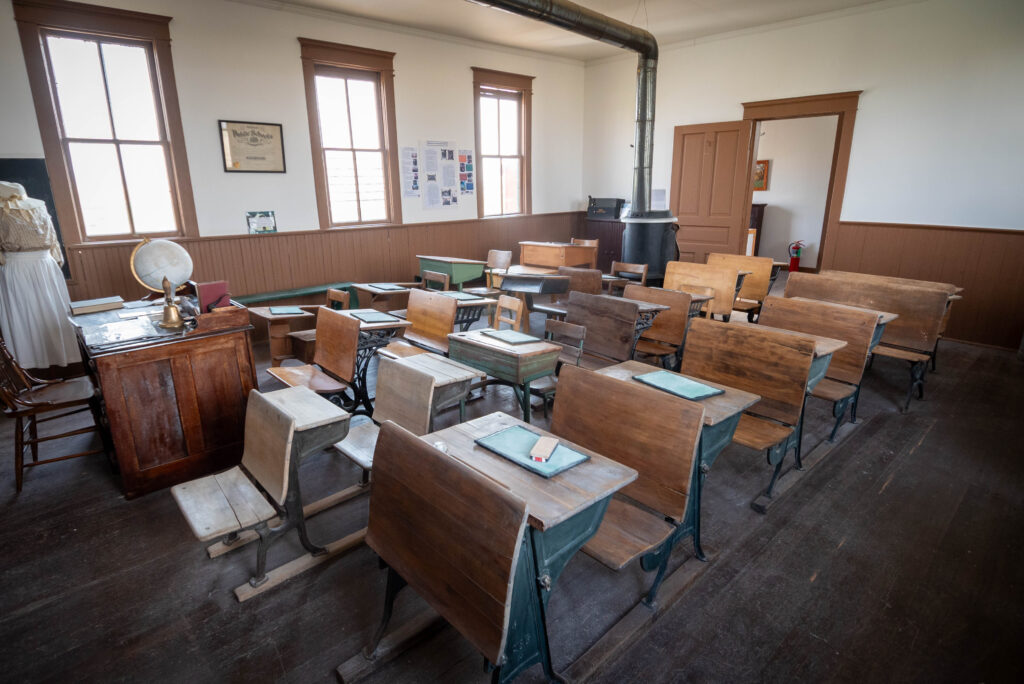
Inside, the building typically features:
- Period desks and teaching materials
- Historical memorabilia and photographs
- Displays illustrating student life and curriculum from the era
Significance Today
As part of the Souris Valley Museum, the schoolhouse plays an important role in preserving local history. It offers a tangible connection to the experiences of early settlers and highlights how education shaped community life in southeastern Saskatchewan.